
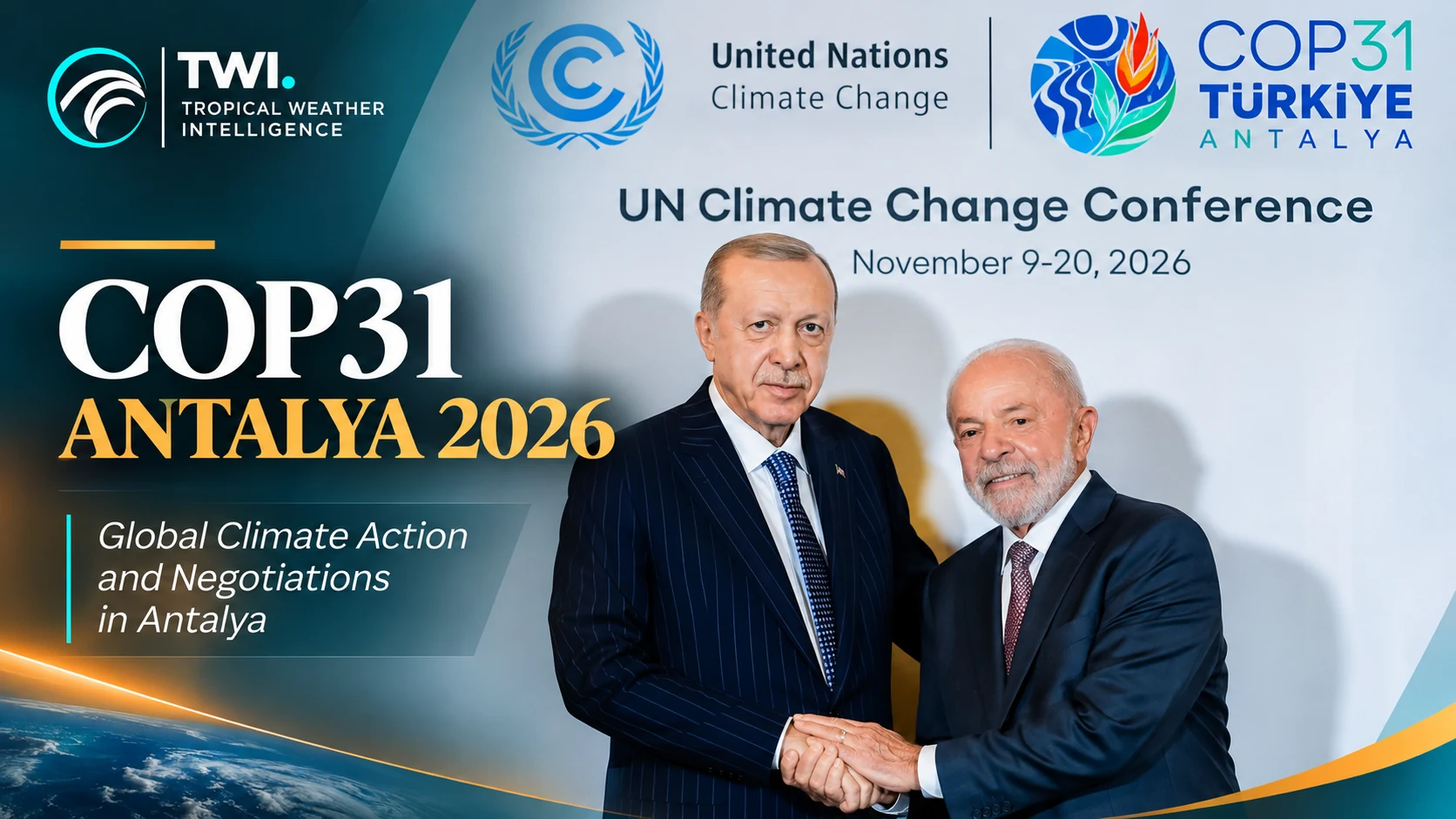
Climate diplomacy meets physical reality
COP31 is being held in Antalya, Türkiye, on 9–20 November 2026. International negotiations operate through policy commitments and implementation mechanisms; the atmosphere responds to greenhouse-gas concentrations, energy balances and changes in the water cycle. The distinction is essential: a summit can influence future emissions and resilience, but it cannot by itself prevent an individual thunderstorm, cyclone or flood.
Why Southeast Asia is exposed
Maritime Southeast Asia sits within the warm tropical Indo-Pacific, where deep convection, monsoon variability and moisture transport affect highly populated coastlines and mountain catchments. Rising temperatures increase the atmosphere’s capacity to hold water vapour, a physical ingredient for heavy precipitation when lifting and storm organization are favourable. Local outcomes remain shaped by circulation, land use, topography and exposure; not every extreme event can be attributed to climate change without a dedicated analysis.
From global ambition to local weather risk
Mitigation, adaptation and disaster-risk reduction serve complementary purposes. Emissions reductions limit long-term warming; adaptation can improve drainage, land-use planning and infrastructure resilience; early-warning systems protect communities over hours to days. These pathways require investment in monitoring networks, forecast verification, impact-based warnings and communication that people can act upon.
The science that negotiators should not overlook
Climate projections describe shifts in long-term statistics rather than precise dates of future damaging weather. They are most useful when combined with regional downscaling, observational records, flood exposure maps and quantified uncertainty. Satellite observations and numerical models support operational assessment, but they cannot replace ground reports or official emergency communication.
What to watch during COP31
The test for climate diplomacy is not the number of declarations alone. The important questions concern implementation of mitigation pledges, accessible adaptation finance, support for national meteorological and hydrological services, and measurable improvements in community resilience. As COP31 continues, outcomes should be assessed against official adopted decisions rather than preliminary speeches or proposals.
TWI perspective
For Indonesia and neighbouring countries, climate action becomes meaningful when its benefits reach the local forecast desk, watershed manager and household. Scientific integrity requires separating a documented conference event from policy claims, future climate projections from operational weather forecasts, and evidence from editorial interpretation.