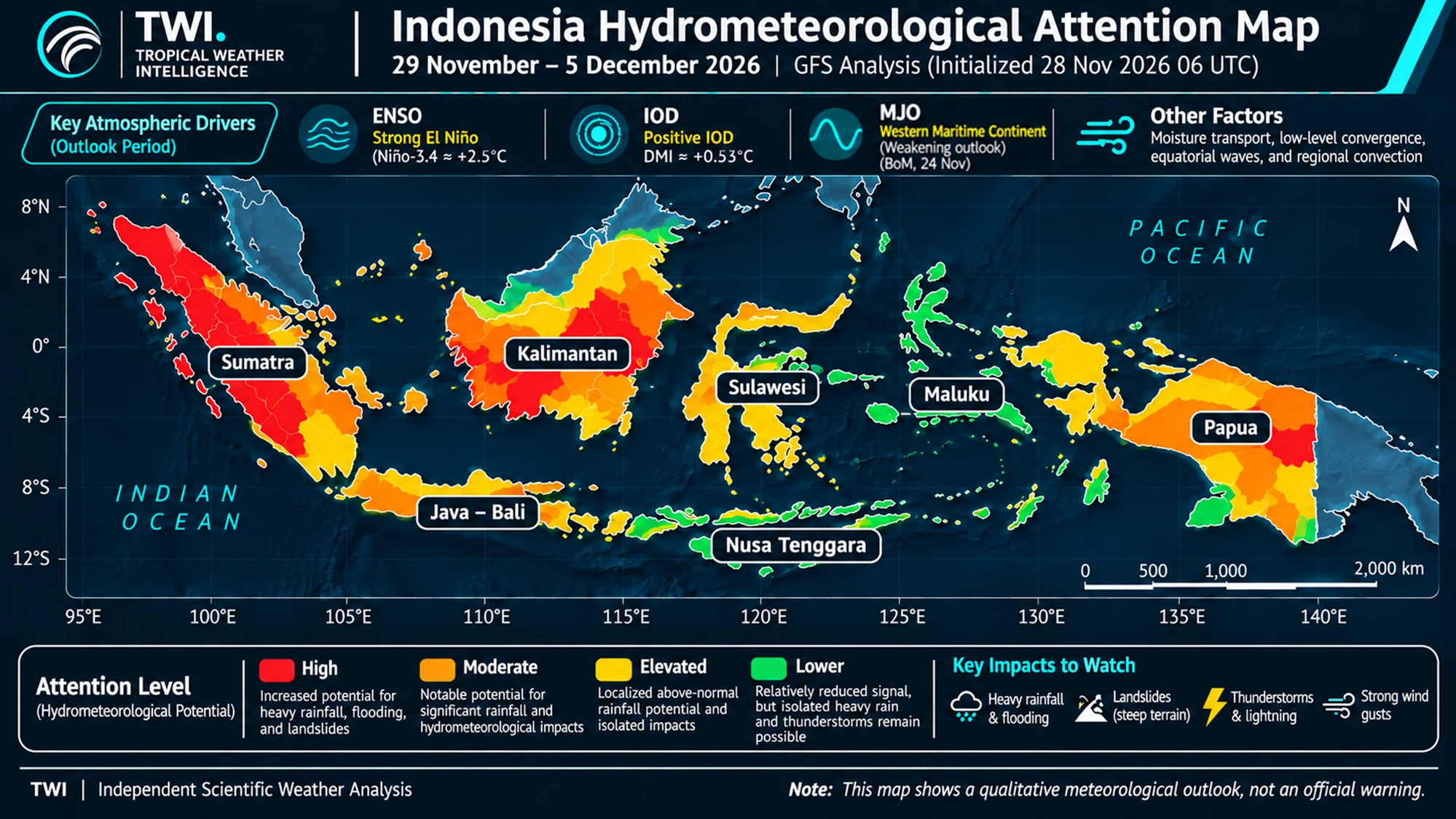
Indonesia Weekly Weather Outlook | 29 November – 5 December 2026
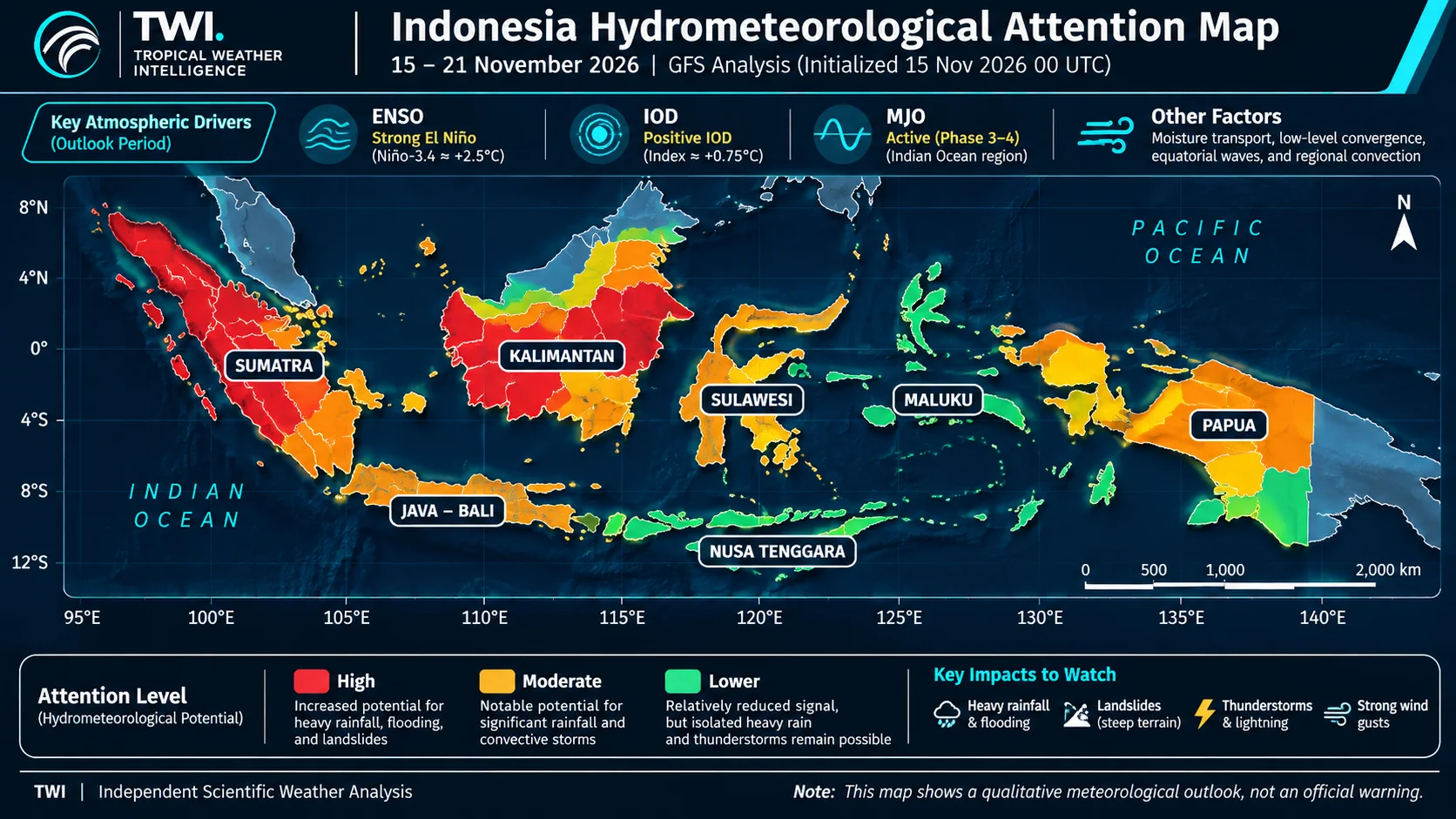
Independent GFS 0.25° rainfall forecast, evolution, moisture, CAPE and regional weather analysis for Indonesia.
Read the Weekly Outlook →Previous Outlook →Lessons from near-equatorial cyclogenesis, extreme rainfall and disaster preparedness.
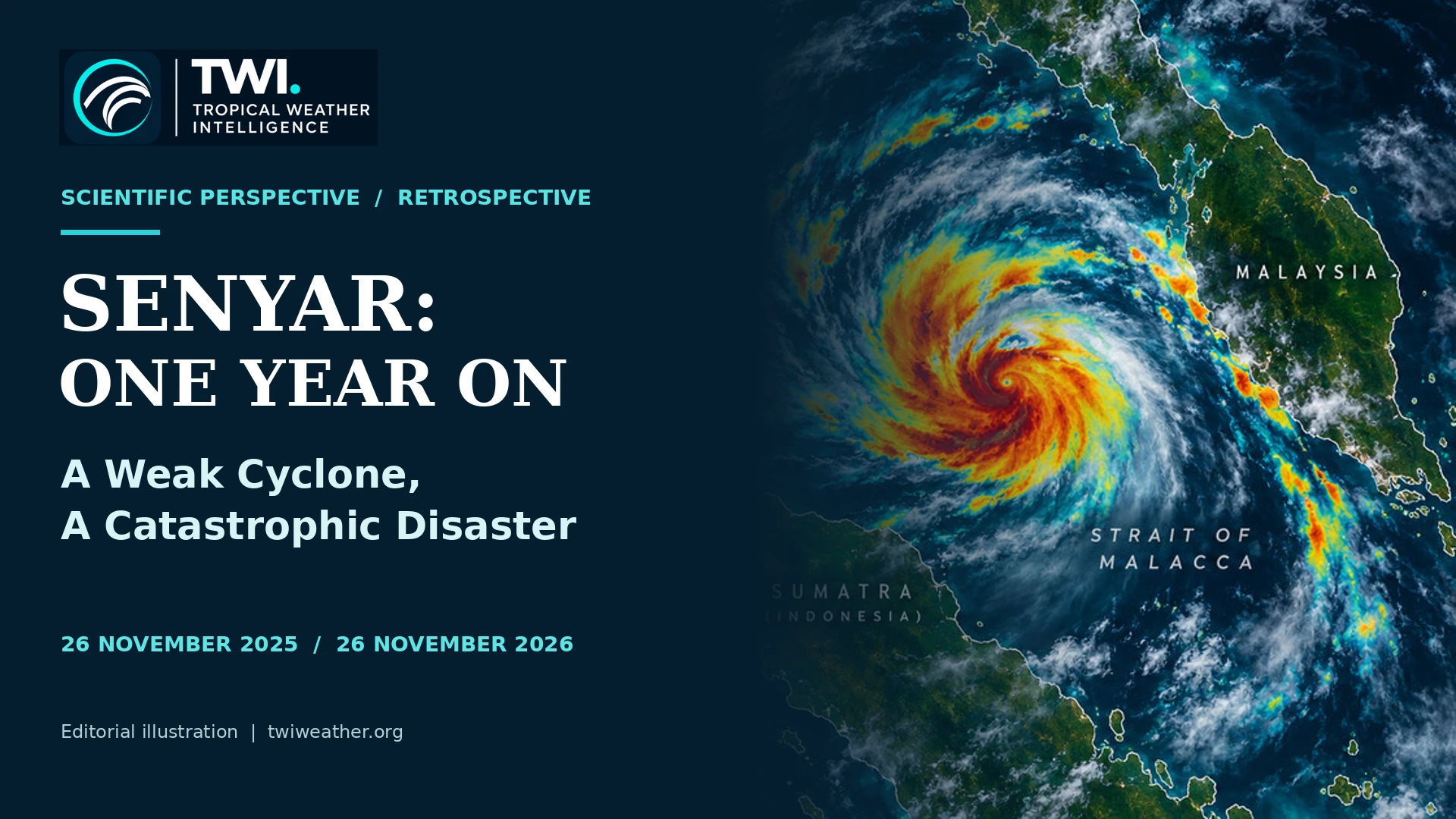
26 NOV 2025 / 26 NOV 2026 · Editorial illustrationIndependent weather analysis, climate insights, and scientific reporting for Indonesia and the Maritime Continent.
Independent GFS 0.25° rainfall forecast, evolution, moisture, CAPE and regional weather analysis for Indonesia.
Read the Weekly Outlook →Previous Outlook →Recent reporting and independent scientific interpretations

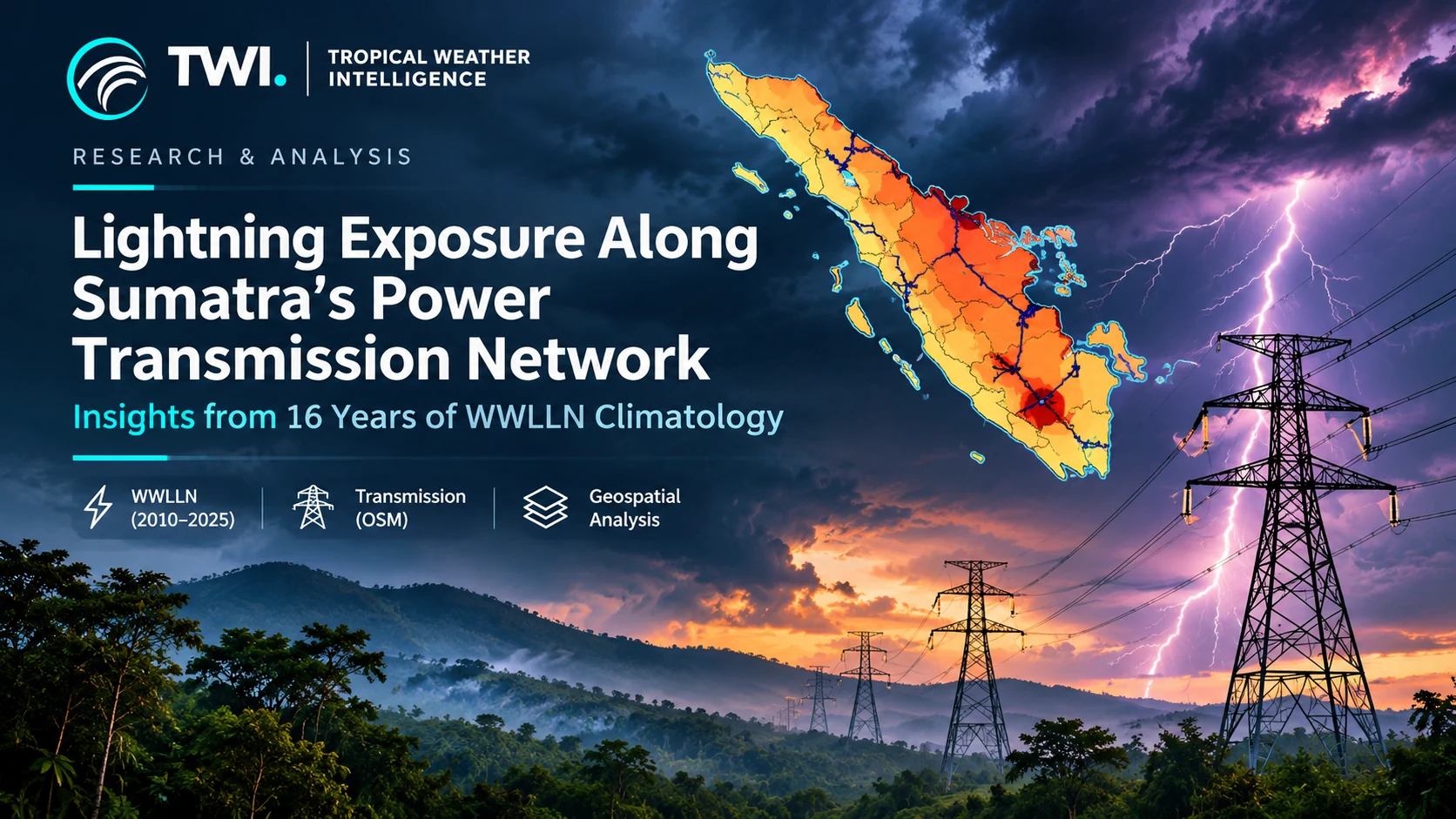
16 years of WWLLN lightning climatology over mapped power-line corridors, with careful scientific limitations.
Read the research →
A Weak Cyclone, A Catastrophic Disaster
Read the analysis →
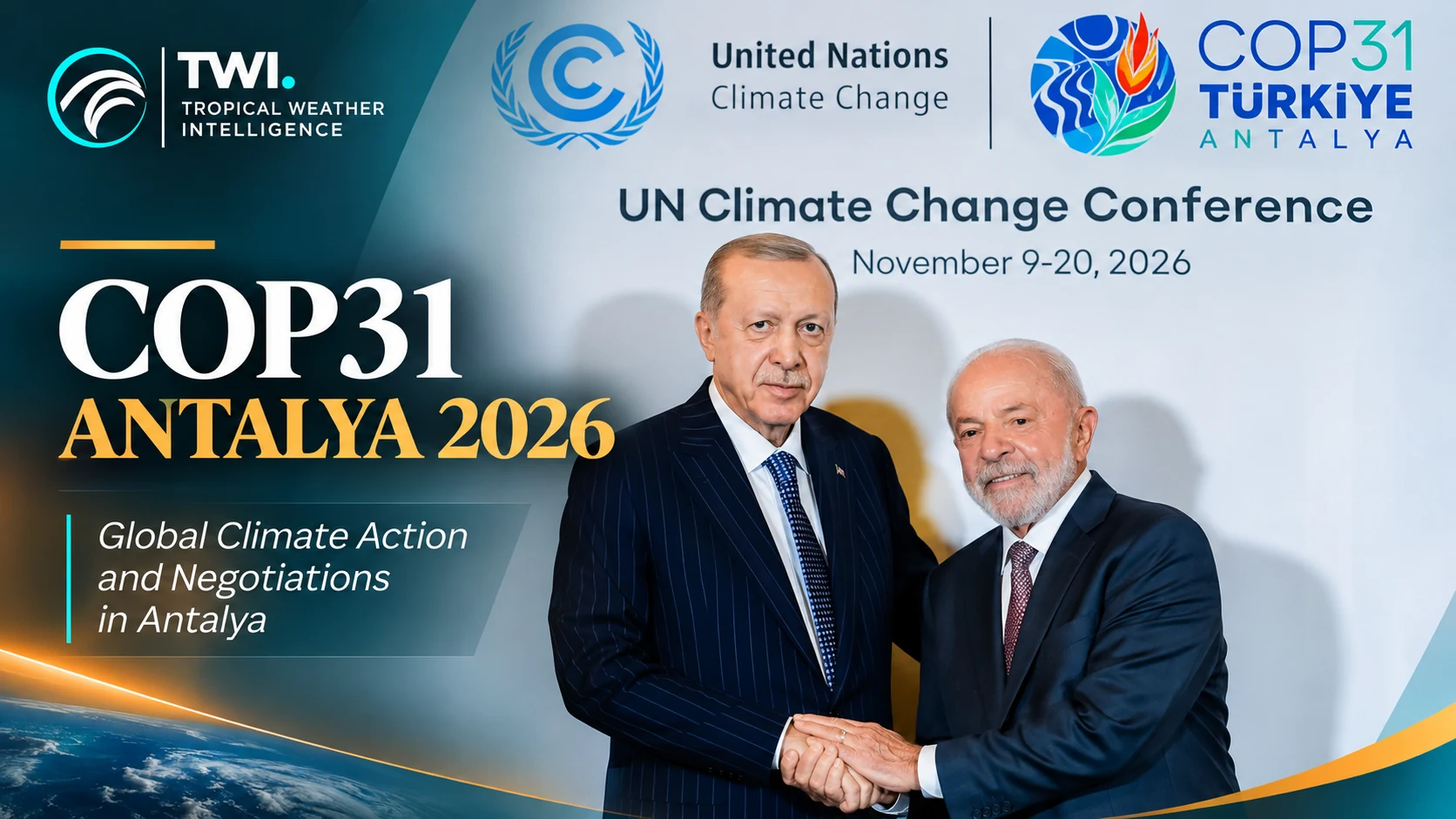
When Global Climate Diplomacy Falls Behind Climate Reality
Read the analysis →Scientifically grounded features worth revisiting

Two tragedies, one survivor, and the atmospheric science behind safer flight.
Read the feature →
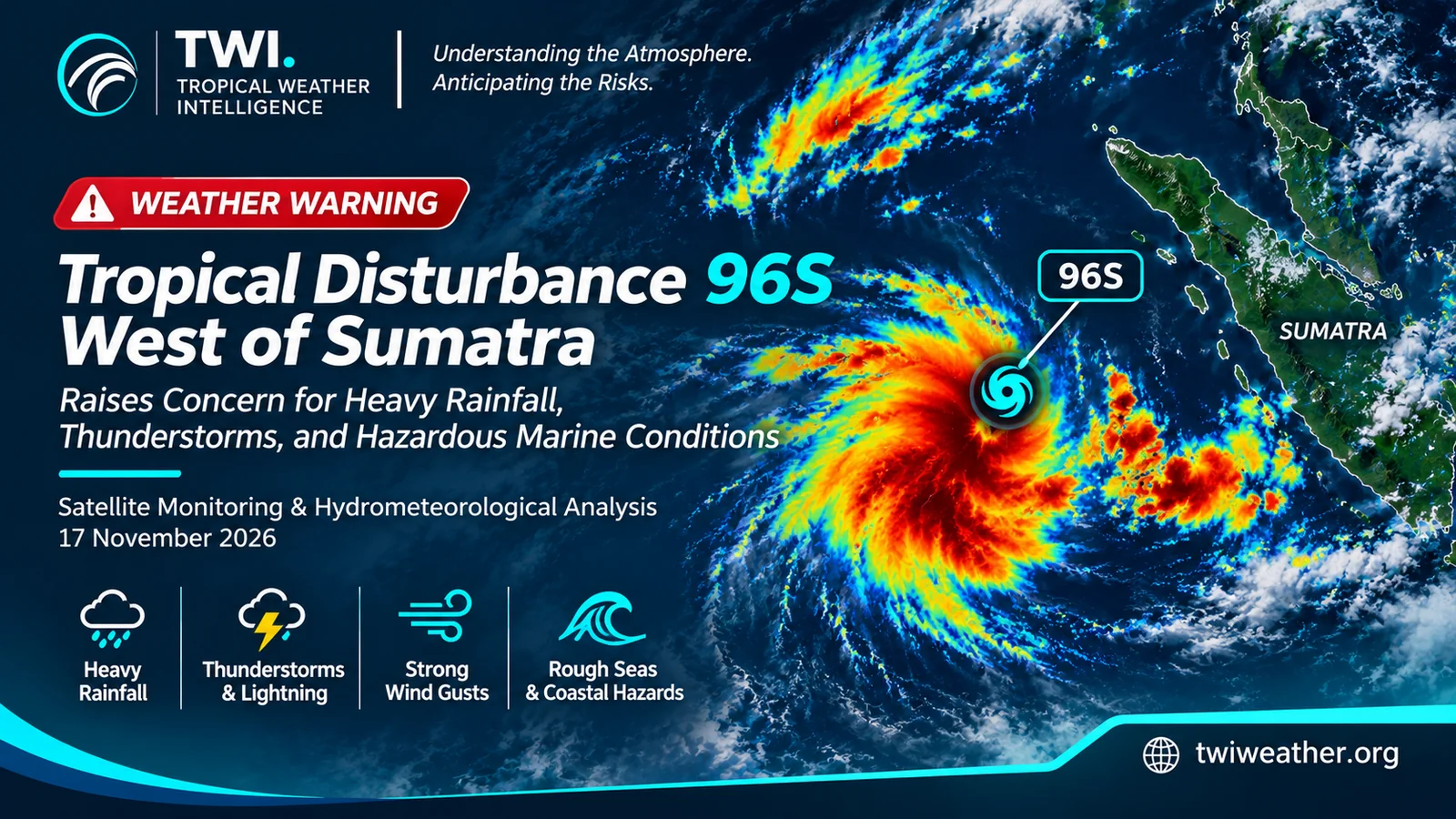
Satellite monitoring of a tropical disturbance west of Sumatra and its potential regional weather implications.
Read 96S analysis →
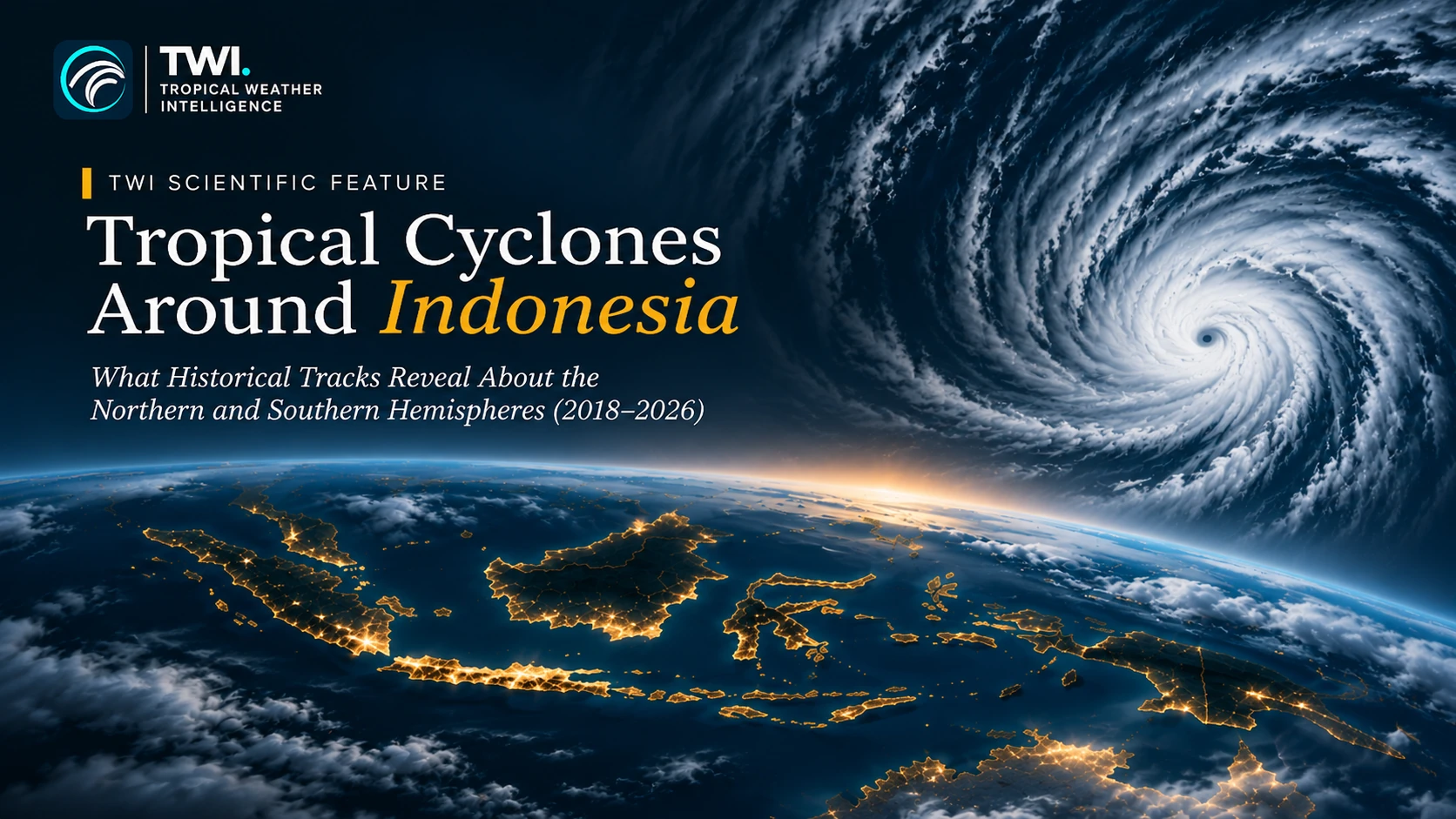
What IBTrACS historical tracks reveal about cyclone pathways north and south of the equator, 2018–2026.
Read the cyclone feature →Explore model-based PM₂.₅ forecasts for 19 Indonesian cities and the upcoming wildfire smoke-monitoring service.
Explore Air Quality Map →Checking forecast validity…
Model forecast, not a station measurement or official AQI.
Model-based outlook for selected Indonesian cities · next 3 days
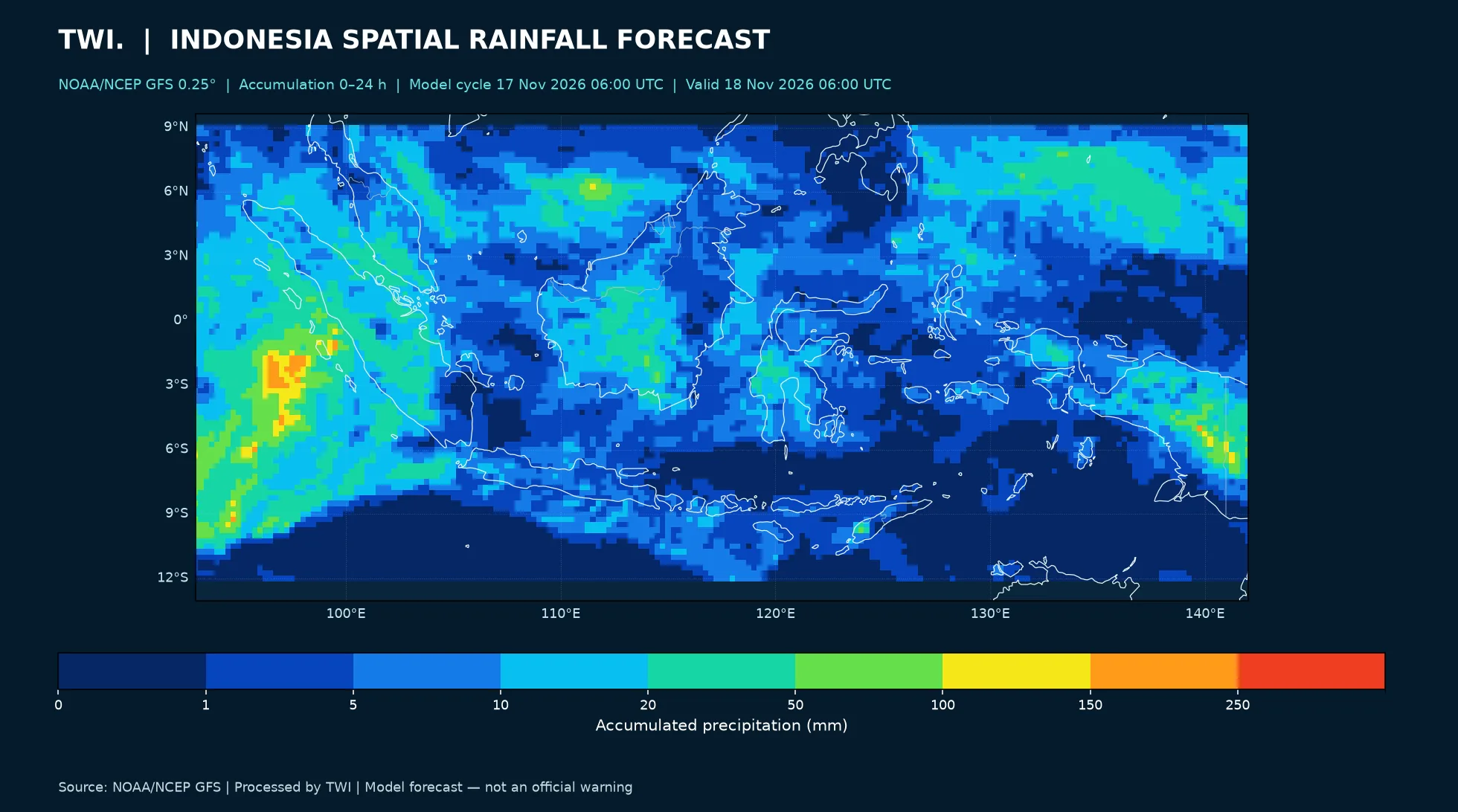
Data: NOAA GFS · processed by TWICity point forecasts and nationwide spatial rainfall
Model forecasts are informational, not official warnings. Values depend on forecast initialization and may change. For official warnings, consult authorized agencies.
GFS 0.25° nationwide accumulated rainfall forecast; model grid, not measured rainfall.
Experimental, independently processed NOAA/NCEP GFS precipitation forecast. Nearest grid-cell estimates only; not observed rainfall, neighborhood predictions or official warnings. Cumulative 0–24 / 0–48 / 0–72 h from model initialization. Check forecast initialization and valid time before use.
Rainfall, thunderstorm and wind-gust signals for the next 24–72 hours at 19 Indonesian cities.
Explore the Outlook →
17 NOVEMBER 2026 · TROPICAL MONITORINGTropical Disturbance 96S West of Sumatra
20 NOVEMBER 2026 · TROPICAL METEOROLOGYTropical Cyclones Around Indonesia
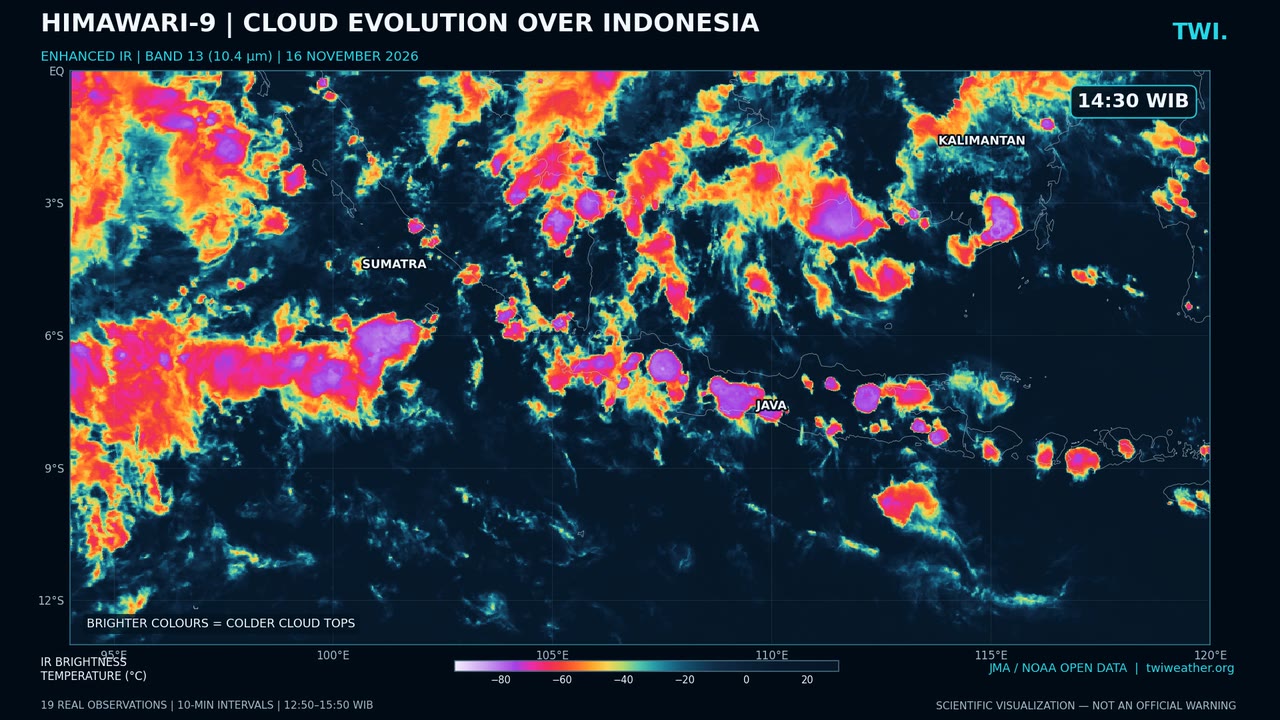
16 NOVEMBER 2026 · SATELLITE MONITORINGDeep Convective Clouds over Java | Himawari-9
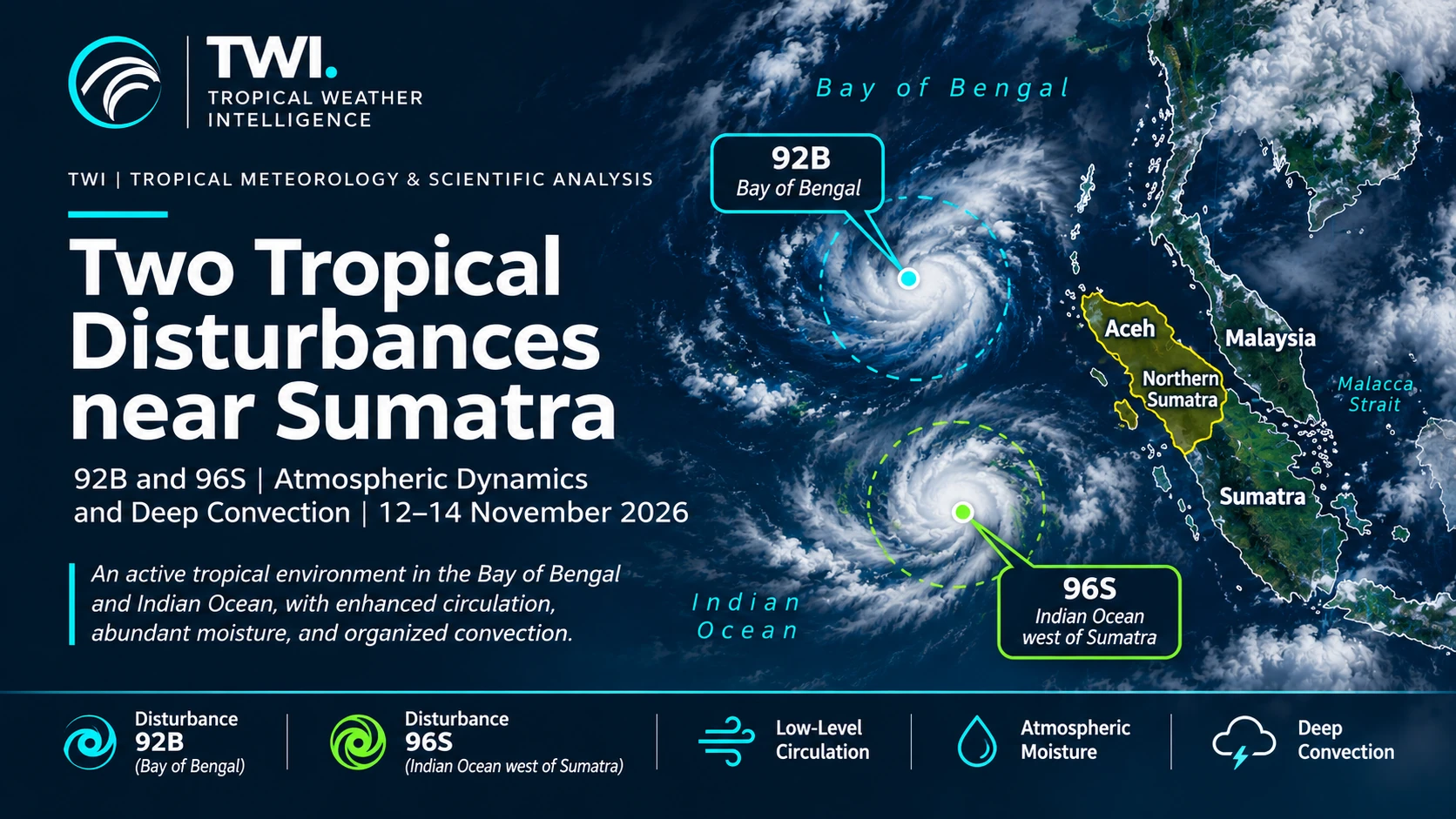
14 NOVEMBER 2026 · TROPICAL METEOROLOGYTwo Tropical Disturbances near Sumatra
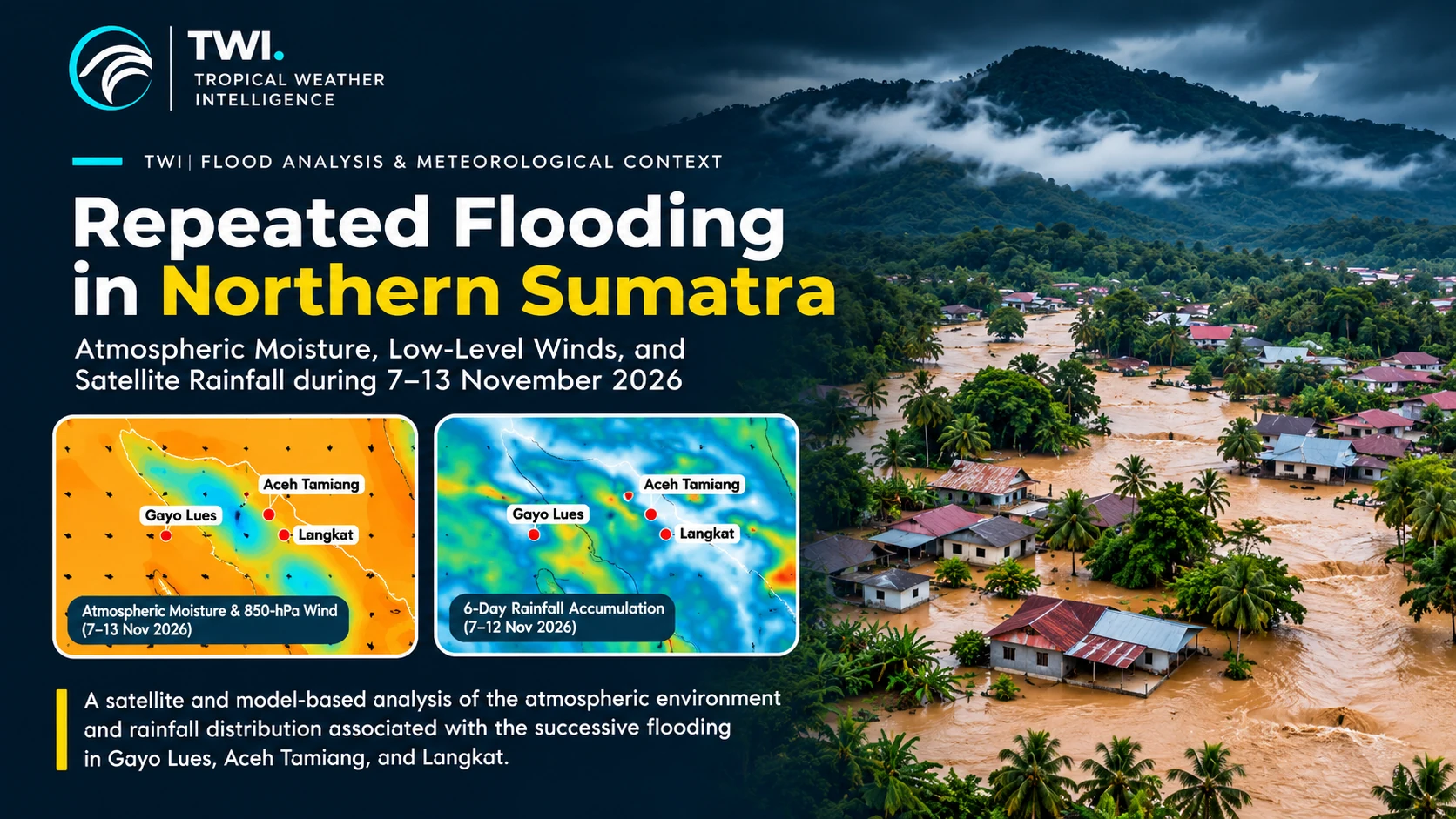
13 NOVEMBER 2026Repeated Flooding in Northern Sumatra
View all scientific analyses →
Scientific explanations of weather hazards, tropical dynamics and extreme events for newsrooms.
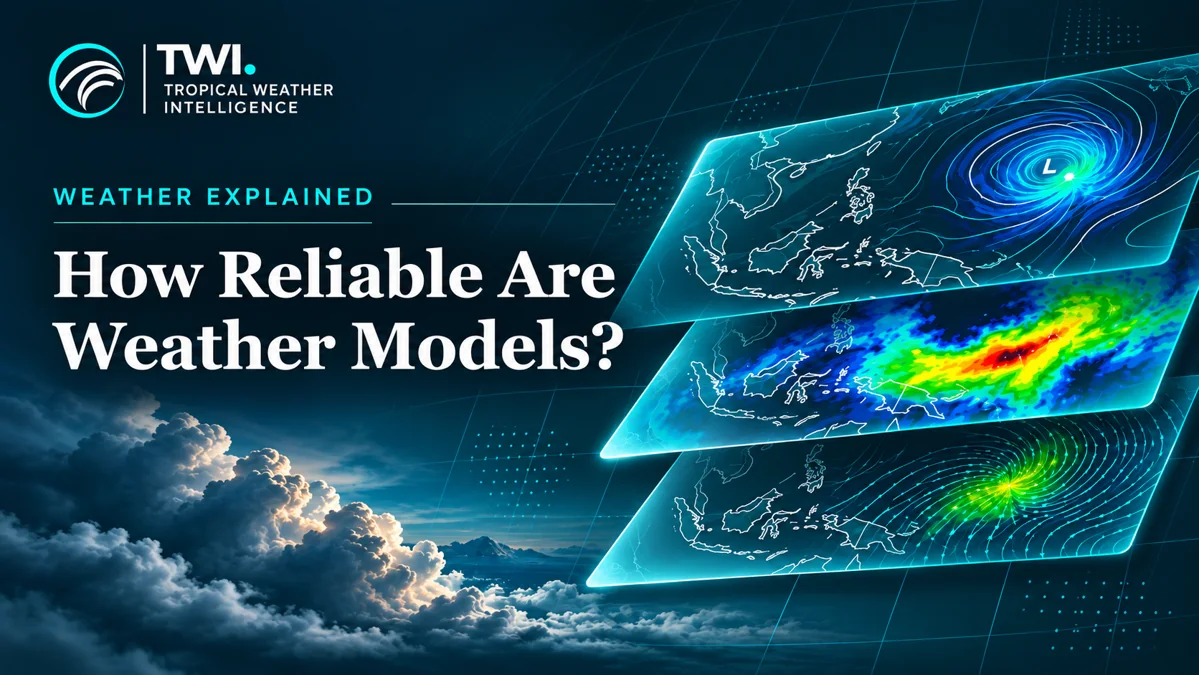
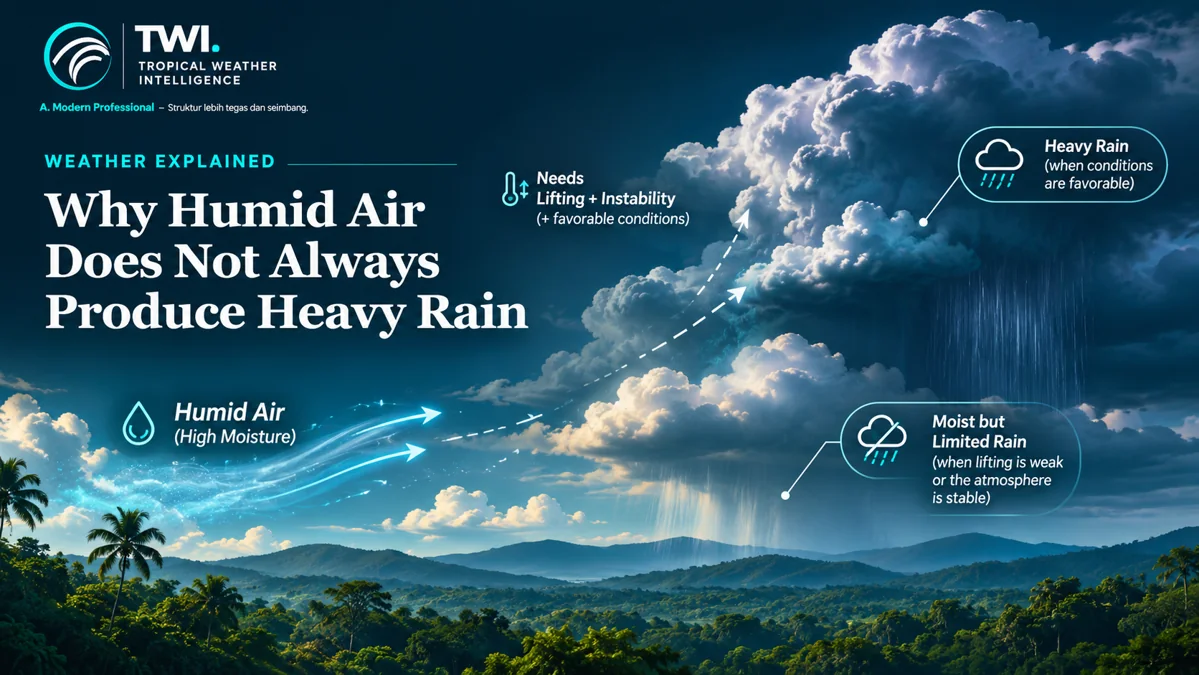
Contact Media Desk →Independent, accessible explanations of forecast uncertainty, atmospheric moisture and tropical convection.
Explore the aircraft's reported flight path in relation to volumetric NEXRAD radar reflectivity. This scientific visualization illustrates atmospheric structure, not a confirmed accident cause.
Research visualization · NEXRAD radar reflectivity (dBZ) · Not direct evidence of in-flight icing, turbulence or accident causation.
Case-based interpretation combining satellite imagery, reanalysis, observations, and physical meteorology.
Lessons from near-equatorial cyclogenesis, extreme rainfall and disaster preparedness.
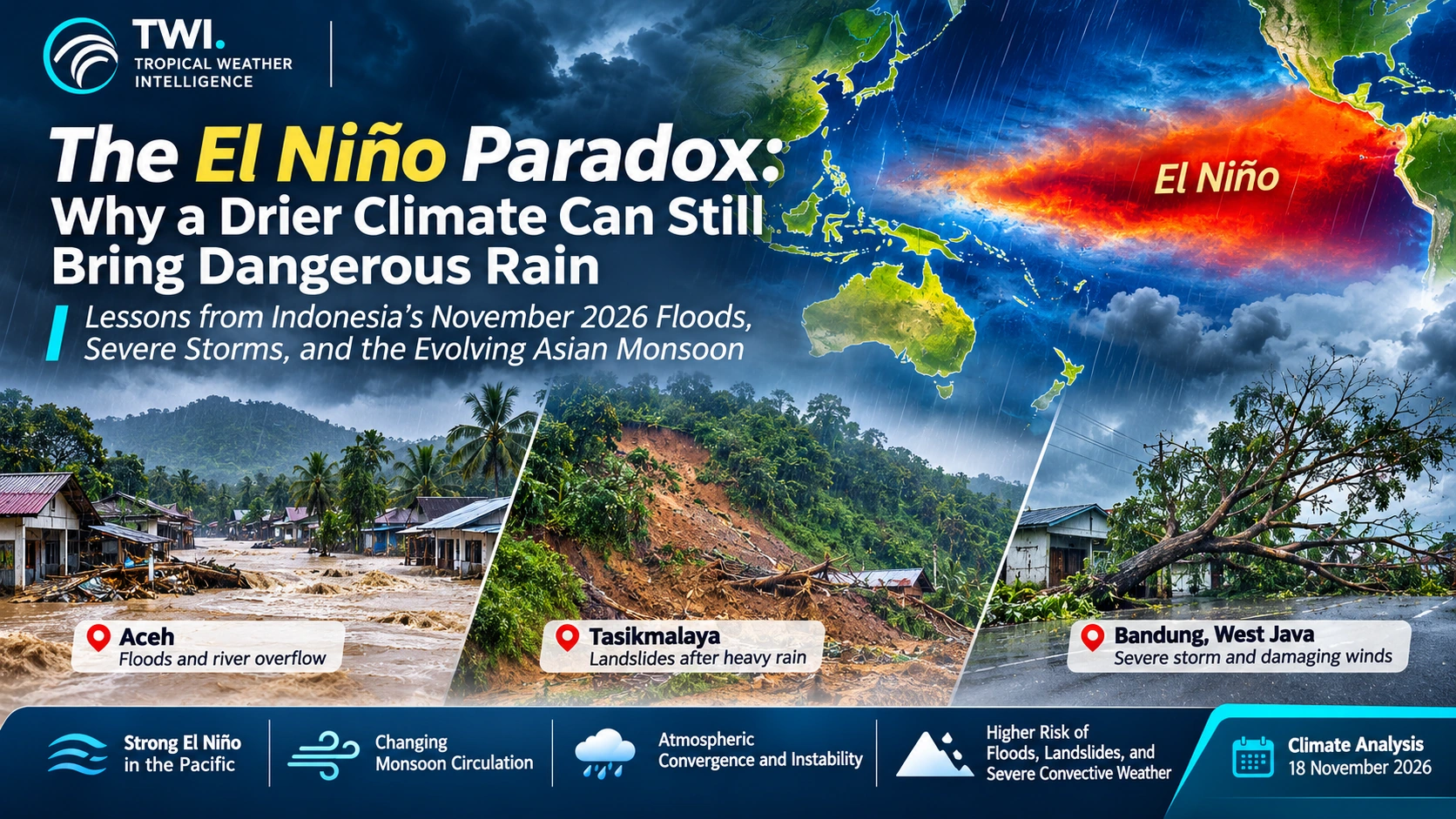
Read the bilingual article ↗Why a drier climate can still bring dangerous rain, with lessons from Aceh floods, West Java storms, Pacific warming, and monsoon processes.
Read the bilingual climate feature ↗Two tragedies, one survivor, and the physics of lightning, cumulonimbus clouds, and aircraft safety.
Read the bilingual science feature ↗Satellite interpretation, earlier rainfall-attention context and public weather precautions.
Read bilingual scientific analysis ↗Three-hour Himawari-9 infrared monitoring, cloud-top temperature interpretation and public weather precautions.
Read bilingual scientific analysis ↗Independent GFS analysis of rainfall, moisture transport, convective potential and regional weather concerns.
Read bilingual weather outlook ↗A scientific perspective on climate negotiations, warming, rainfall extremes and the early-warning challenge facing tropical Southeast Asia.
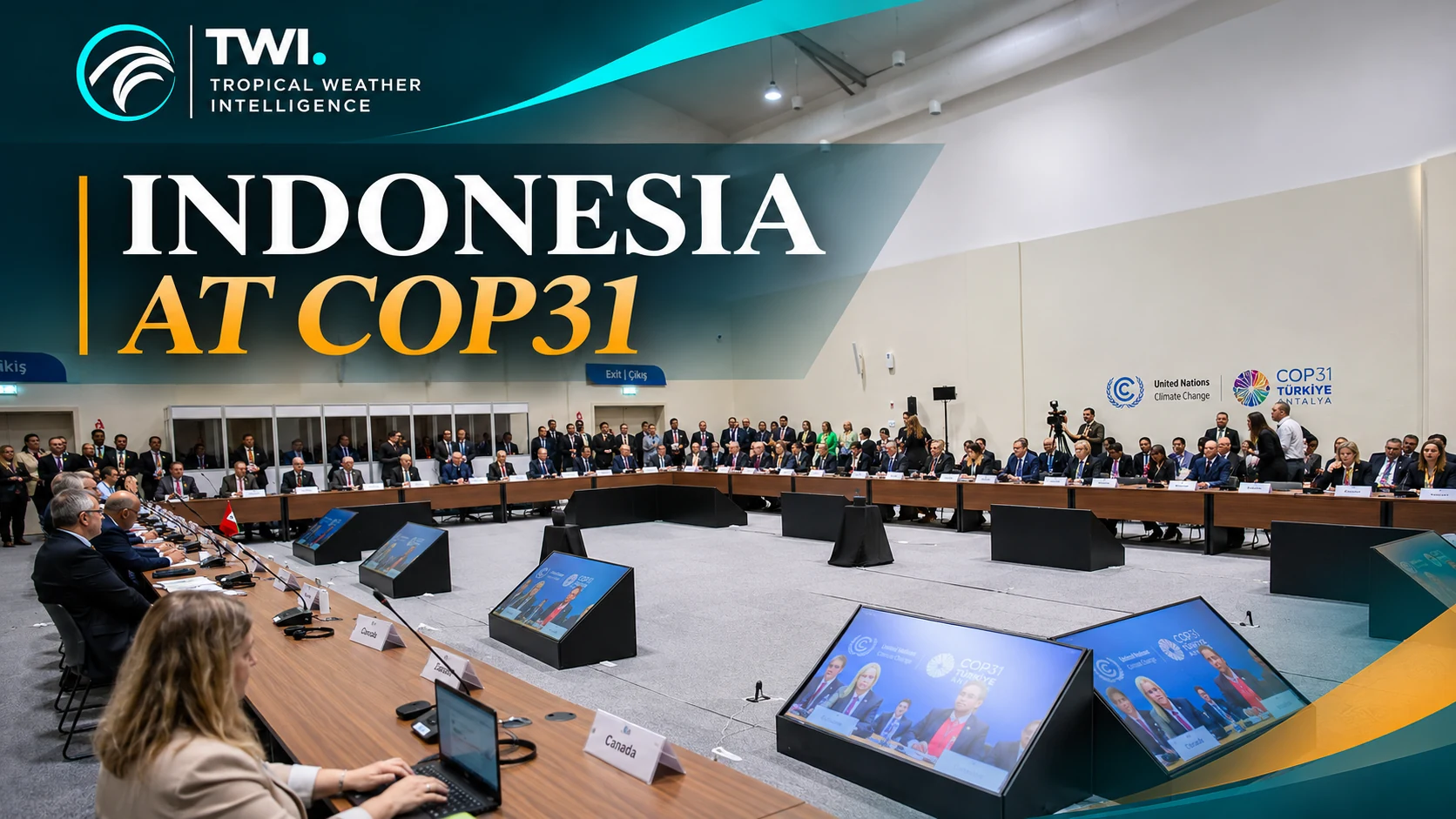
Read bilingual analysis ↗Indonesia’s climate priorities viewed through the practical needs of meteorological services, early warning and climate adaptation.
Read bilingual analysis ↗
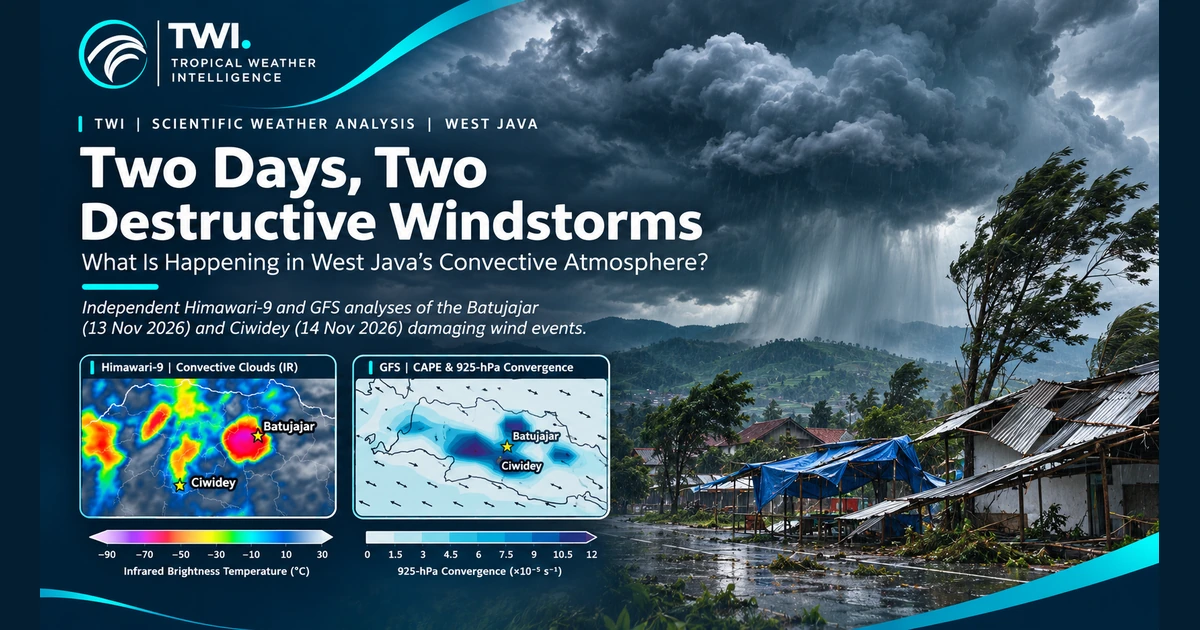
SCIENTIFIC ANALYSISEDITORIAL PRESENTATIONHimawari-9 and GFS analysis of damaging winds in Batujajar and Ciwidey, 13–14 November 2026.
Read the atmospheric analysis ↗
SCIENTIFIC ANALYSISEDITORIAL ILLUSTRATIONIndependent GFS and Himawari-9 analysis of 92B and 96S during 12–14 November 2026.
Read tropical weather analysis ↗
SCIENTIFIC ANALYSISEDITORIAL ILLUSTRATIONGFS moisture, 850-hPa winds and NASA IMERG rainfall in Gayo Lues, Aceh Tamiang and Langkat during November 2026.
Read flood analysis ↗
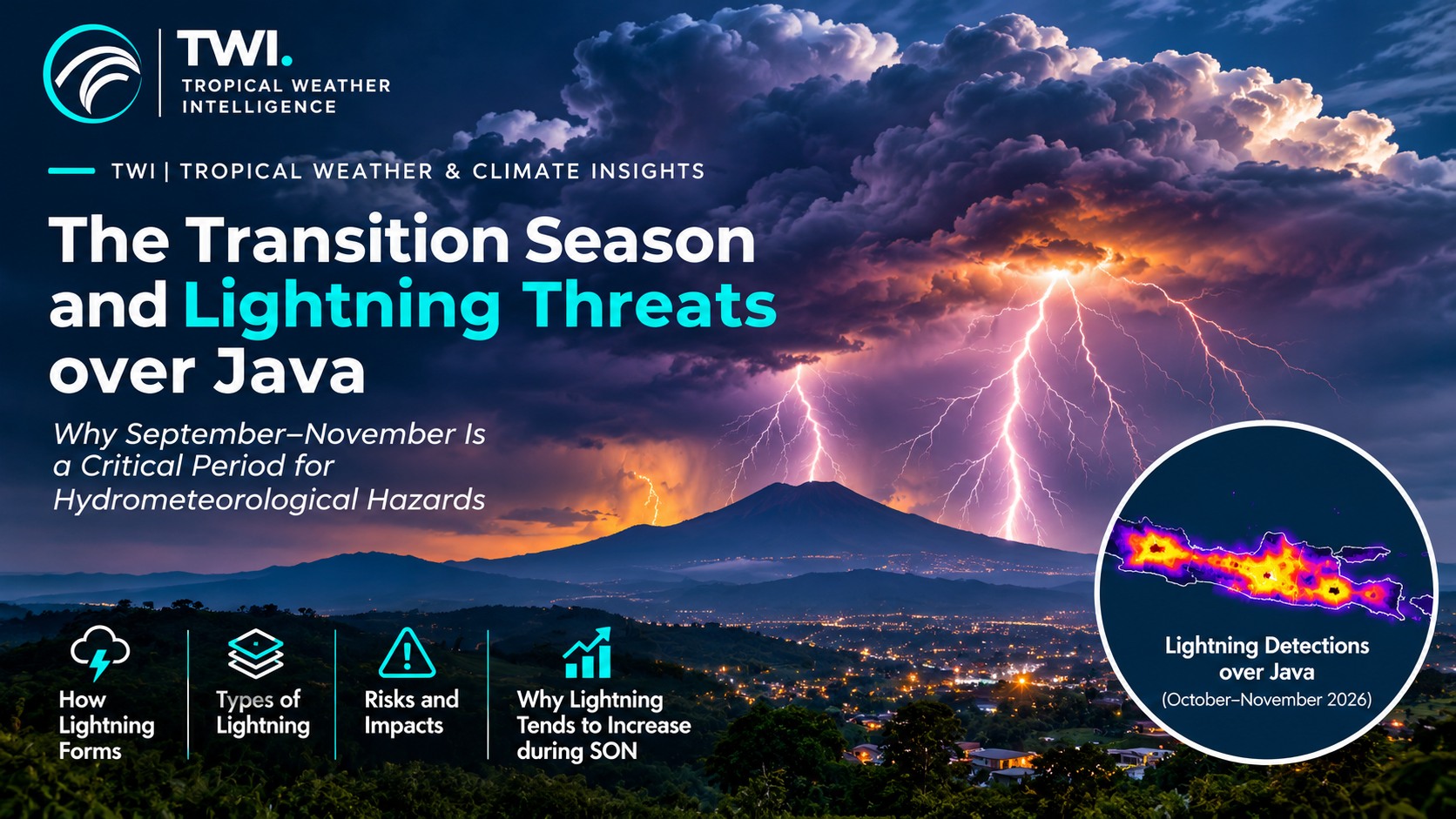
SCIENTIFIC ANALYSISEDITORIAL ILLUSTRATIONThe science of lightning, September–November convection, and hydrometeorological risks across Java.
Read lightning analysis ↗
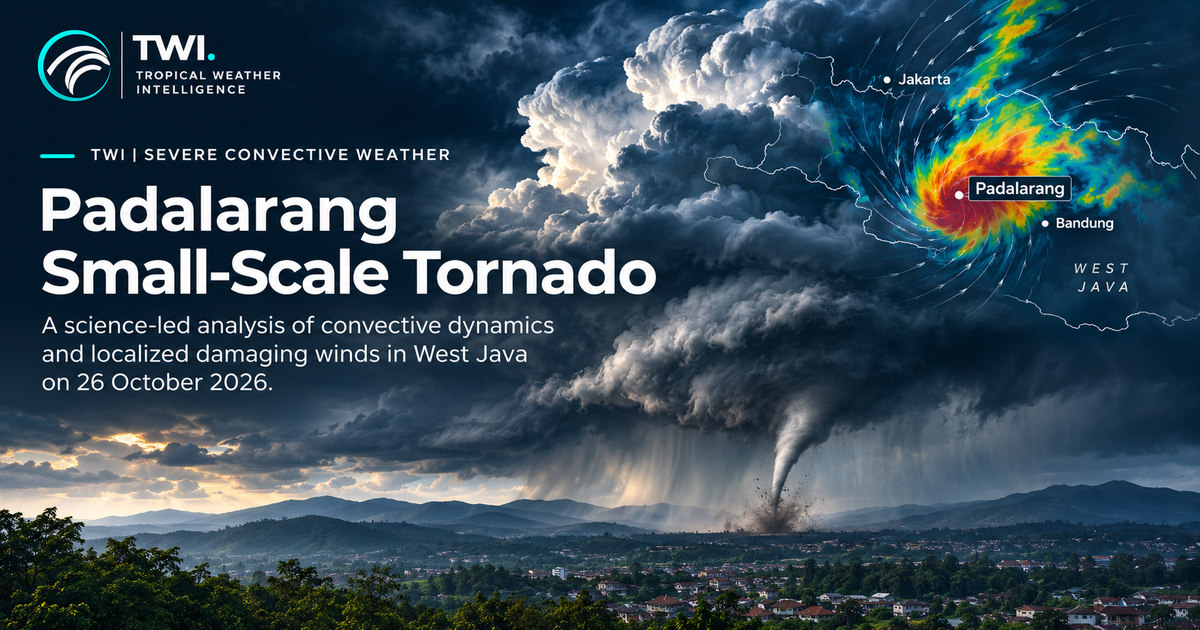
CASE STUDYEDITORIAL ILLUSTRATIONHimawari-9 and ECMWF analysis of a damaging wind event in West Java, with careful discussion of tornado verification.
Read convective weather analysis ↗
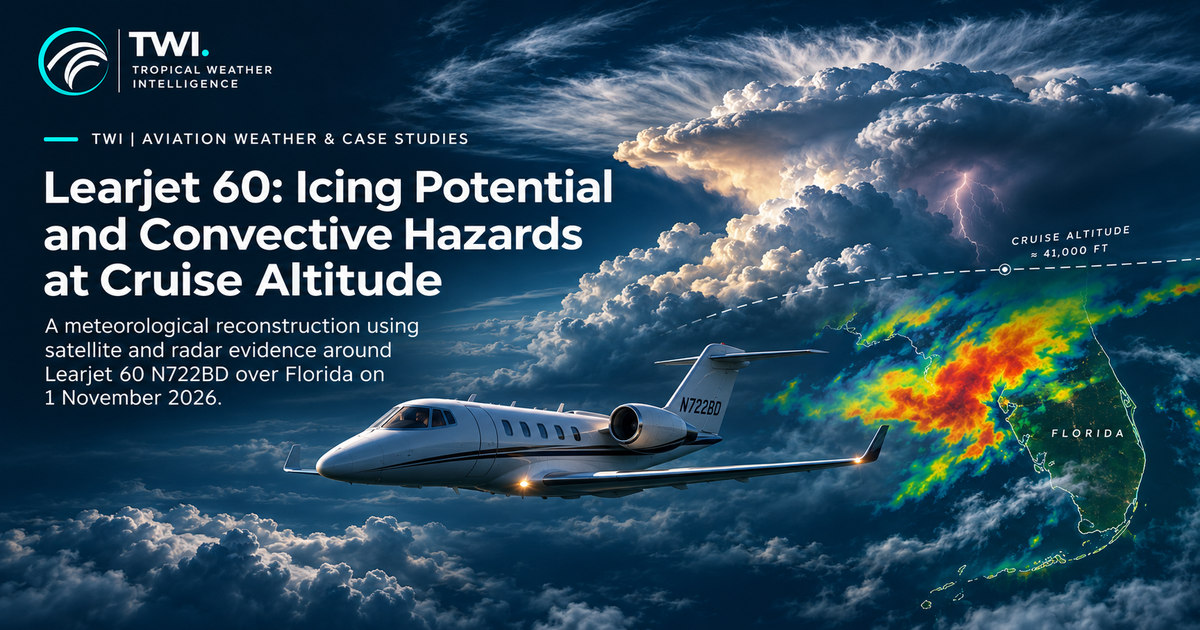
CASE STUDYEDITORIAL ILLUSTRATIONA cautious GOES-19, NEXRAD and ADS-B reconstruction of the convective environment, without attributing accident cause.
Read aviation weather analysis ↗
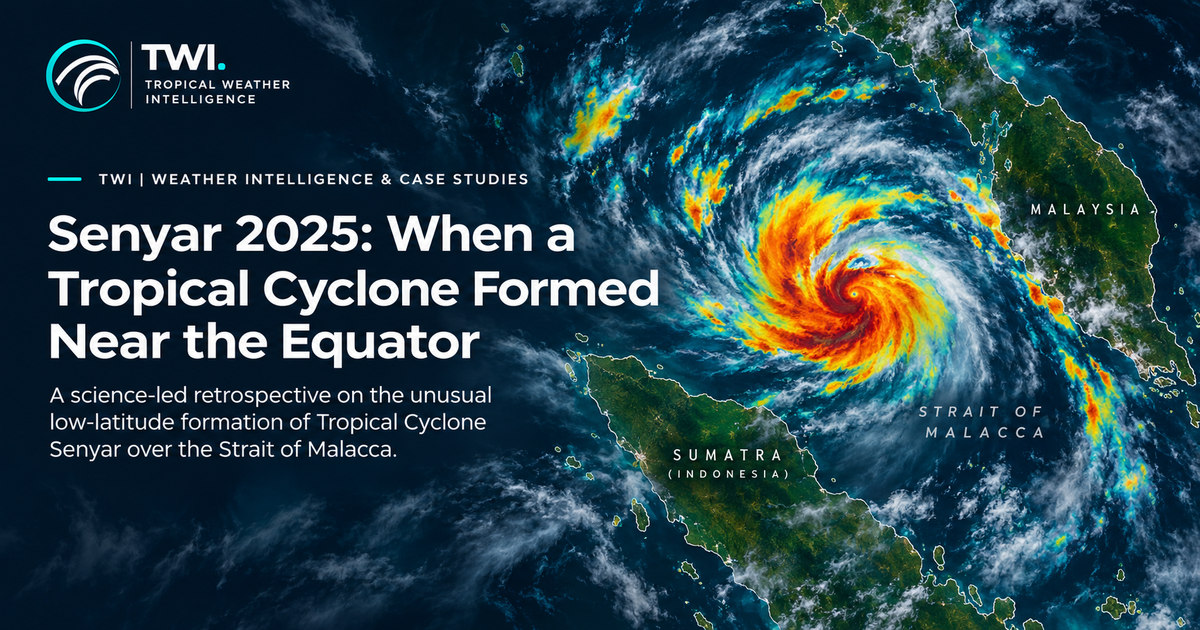
CASE STUDYEDITORIAL ILLUSTRATIONA research focus on vorticity dynamics, atmospheric moisture, and geographic modulation in the Malacca Strait.
Read scientific analysis ↗Images and videos derive from observational or modeled data; interpretations are exploratory, not official weather warnings or accident findings.
Technical rigor combined with practical communication for research, media, and risk-informed decisions.
Himawari imagery, ERA5 circulation diagnostics, rainfall and moisture analysis.
Tropical cyclones, mesoscale convection, severe thunderstorms, and lightning.
Hydrometeorological hazards and weather-sensitive infrastructure assessments.
Technical reviews, science communication, and tailored meteorological workshops.
For editors, journalists, and producers seeking informed interpretation of tropical weather and severe atmospheric events. Interviews, context, and explanatory analysis are subject to availability and evidence.
Request expert commentaryTWI connects atmospheric analysis, scientific writing, and collaborative research. This section highlights selected technical assignments and research leadership experience. Research publications are intentionally not listed at this stage.
Discuss a collaboration ↗Tropical Weather Intelligence is being developed as an independent scientific communication and consultancy platform focused on the tropical atmosphere, extreme weather, and climate-related hazards. It aims to make complex analysis accessible without compromising scientific context.
TWI is independent and is not presented as an official agency forecasting or warning channel.
Selected professional projects and scientific work undertaken by TWI’s founder before the creation of the independent platform.
Research on meteorological hazards, vulnerability, and risk relevant to feasibility assessment of a proposed nuclear power plant near Gosong Beach. BRIN–LPDP supported.
Principal Investigator · West Kalimantan, 2022–2024Site meteorological data quality control, upper-air observation, hazard characterization, and technical assessment through projects involving Surveyor Indonesia, Renuko, and BATAN.
PI / Meteorological Aspect Leader · Bangka, Serpong and West KalimantanInterdisciplinary research on hydrometeorological risks and flood mitigation through river-basin management, supported by NERC, ESRC, Newton Fund, and Indonesian partners.
Co-Investigator · 2019–2021Projects involving upper-air data, radiosonde and GNSS radio occultation, atmospheric monitoring, and extreme-weather studies.
PI / Co-Investigator · 2021, 2023–2025Research experience involving cloud-to-ground lightning, precipitation relationships, storm evolution, and the use of lightning information in weather-hazard analysis.
Scientific research · IndonesiaExperience summaries are presented without confidential project documents, unverified budgets, or implied endorsement by past clients and institutions.
Bridging atmospheric research, operational meteorology, and science-based risk assessment to support informed decisions.
An Indonesian meteorologist and academic with over two decades of experience in operational weather forecasting, atmospheric dynamics, extreme weather, meteorological risk assessment, and applied scientific projects. He served as Director of the Indonesian State College of Meteorology, Climatology and Geophysics (STMKG) from 2024 to 2026, following earlier responsibilities in academic leadership, student affairs, and institutional cooperation.
His expertise spans tropical atmospheric dynamics, lightning physics and thunderstorm electrification, aviation meteorology, satellite and radar observations, numerical weather prediction, and hydrometeorological hazards.
As a Principal Investigator and Meteorological Aspect Leader, he has contributed to nuclear power plant site evaluation, meteorological safety studies, upper-air atmospheric monitoring, and environmental risk assessments through assignments involving Surveyor Indonesia, Renuko, BATAN, and BRIN-supported research.
His work also includes interdisciplinary flood-risk research in the Ciliwung basin and atmospheric monitoring using radiosonde and GNSS observations.
Through Tropical Weather Intelligence (TWI), he aims to advance independent scientific analysis, strengthen research collaboration, and communicate atmospheric evidence to support science, media, and society.

Professional affiliations are provided for biographical context and do not imply institutional endorsement of TWI.
TWI intends to invite relevant specialists in atmospheric science, climate, remote sensing, hydrometeorological hazards, and disaster risk to support future collaboration and scientific advice.
Membership will be published only after invitations are accepted and roles are agreed. No external appointments are claimed at this stage.
Published analyses should identify authors, publication dates, data sources, methods, limitations, and corrections when applicable.
Research previews and expert commentary are distinct from peer-reviewed journal articles and operational weather warnings.
Sponsored or commissioned work, where applicable, should be transparently disclosed and separated from independent editorial analysis.
Media enquiries, research partnerships, consulting and training opportunities.
For initial correspondence, use the TWI administrative Gmail. A domain-based email will be added after configuration.
Email TWI ↗